
KEY PRODUCT ADVANTAGES

COMPARED WITH PILLOW BLADDER
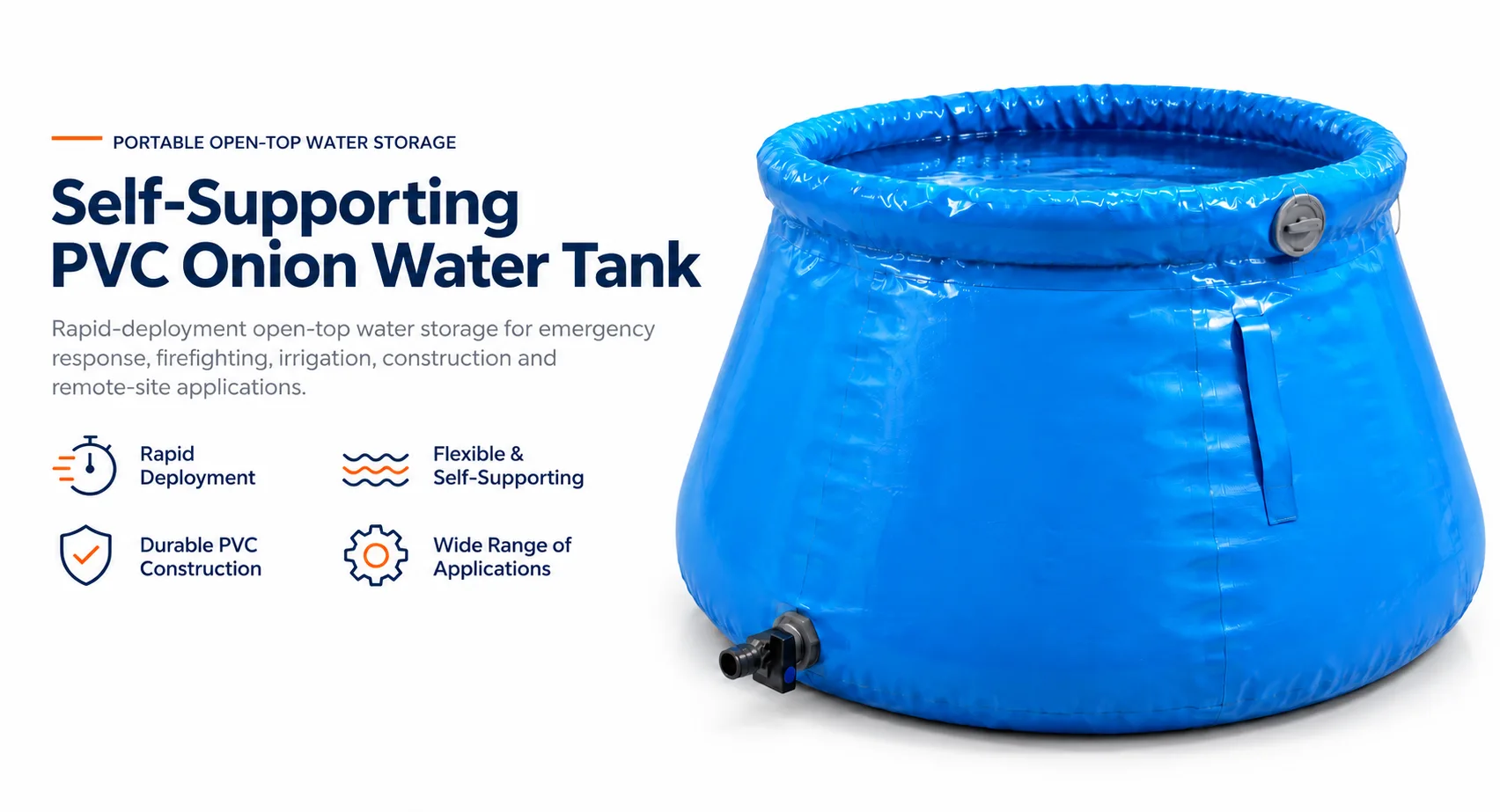
An onion water tank features an open-top, self-supporting design that enables rapid filling and convenient water access without a rigid frame,
making it ideal foremergency response, firefighting, construction and temporary water storage. In comparison, a pillow water bladder is fully
enclosed and filled through inlet fittings,providing sealed storage for longer-term or protected applications. The right solution depends on the
required deployment speed, storage duration, operatingenvironment and access method.
WORKING PRINCIPLE
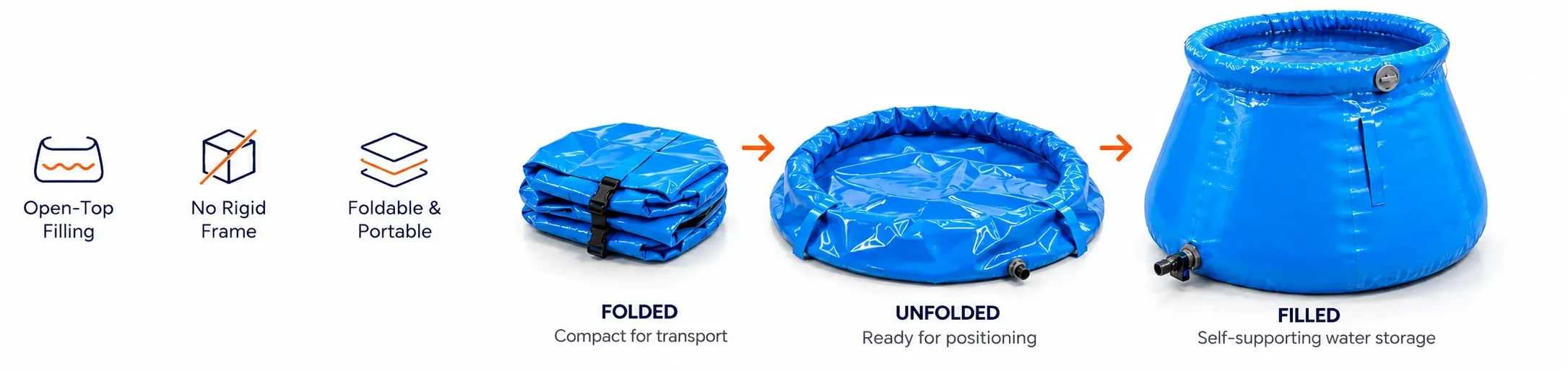
A self-supporting onion water tank provides fast and flexible temporary water storage without requiring a rigid frame. When empty, the collapsible
PVC tank canbe folded into a compact size for convenient transport and storage. To deploy it, simply place the tank on a level, debris-free surface,
unfold the flexible body andfill it through the open top. As water enters, the tank expands upward and supports itself. Its open-top design allows
rapid filling and easy water access, makingit suitable for emergency response, firefighting, agricultural irrigation, construction sites and remote
water supply projects.
PRODUCT STRUCTURE & COMPONENTS
RAW MATERIALS
The self-supporting PVC onion water tank is manufactured from reinforced PVC-coated polyester fabric with a flexible three-layer construction. The
outer PVCcoating provides a waterproof surface with practical abrasion resistance, while the high-strength polyester base fabric supports dimensional
stability duringfilling and use. An inner PVC coating allows the material to remain flexible, foldable and suitable for controlled heat-welded seams.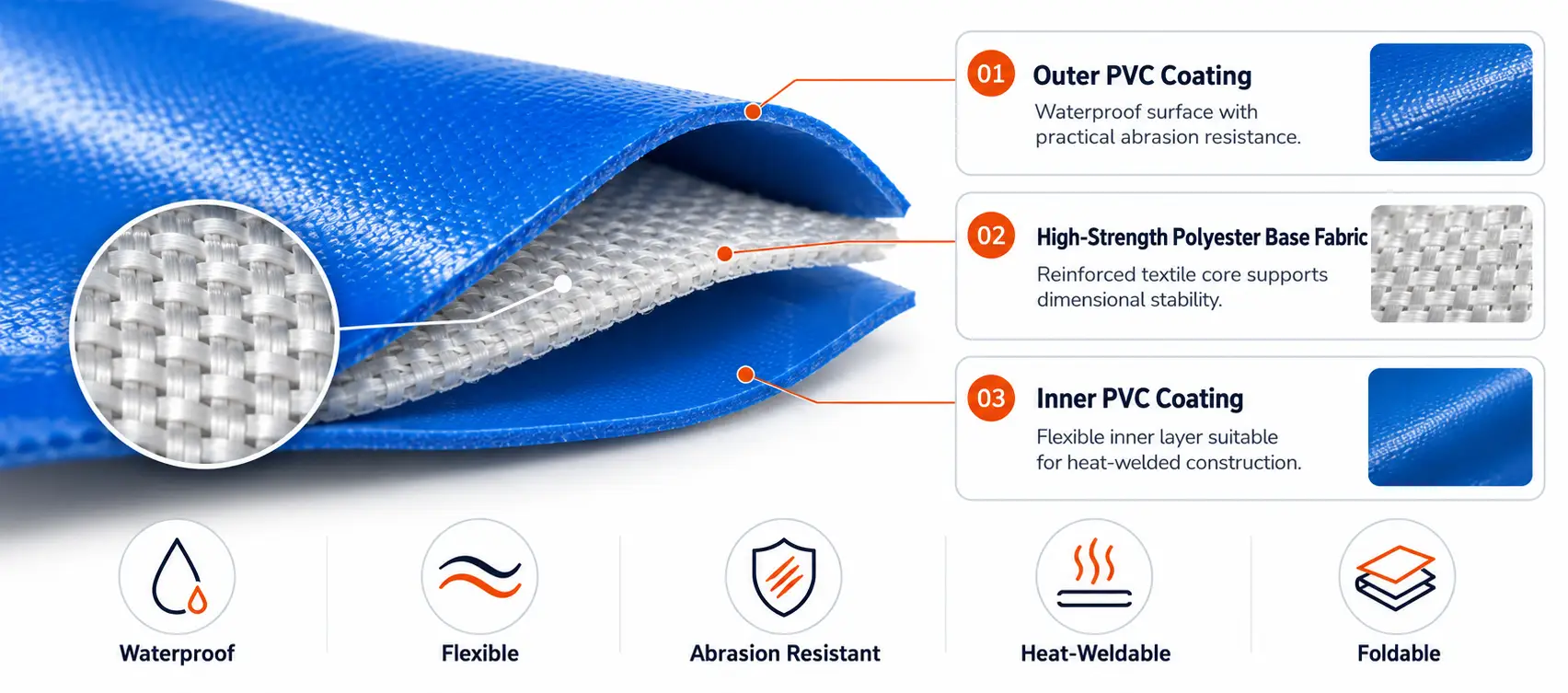
AVAILABLE CAPACITIES & SPECIFICATIONS
APPLICATION SCENARIOS
THIRD‑PARTY CERTIFICATIONS
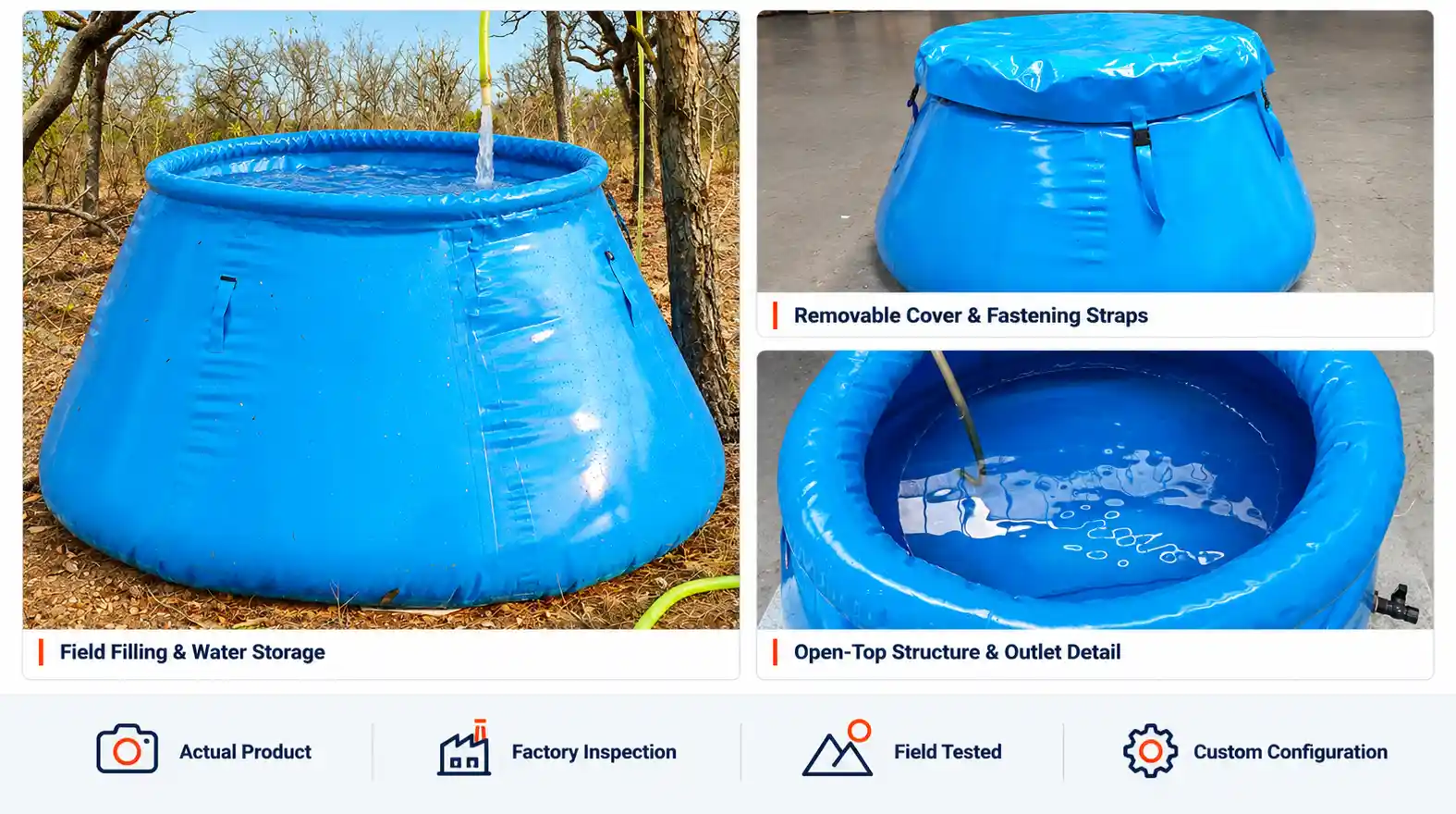

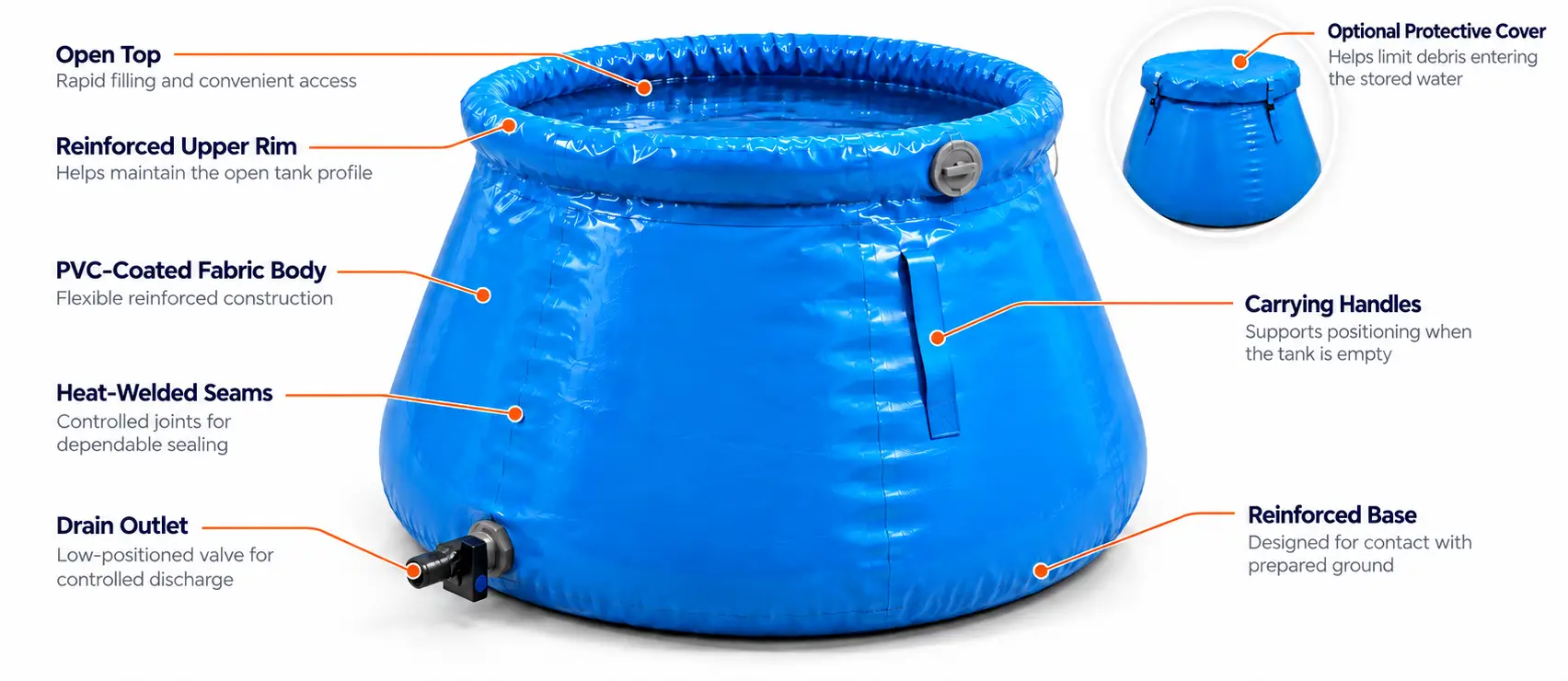
An onion water tank is an open-top flexible water storage container made from PVC-coated fabric. When filled, water pressure allows the tank to form a stable,
self-supporting shape with a wider base and narrower top. Once emptied, it can be folded for compact storage and transportation, making it suitable for
temporary water storage, rapid deployment and mobile water-supply projects.
No. An onion water tank has a self-supporting structure and normally requires no rigid frame or inflatable support ring. To deploy it, select a level site, lay down
a protective groundsheet, unfold the tank and fill it through the open top.
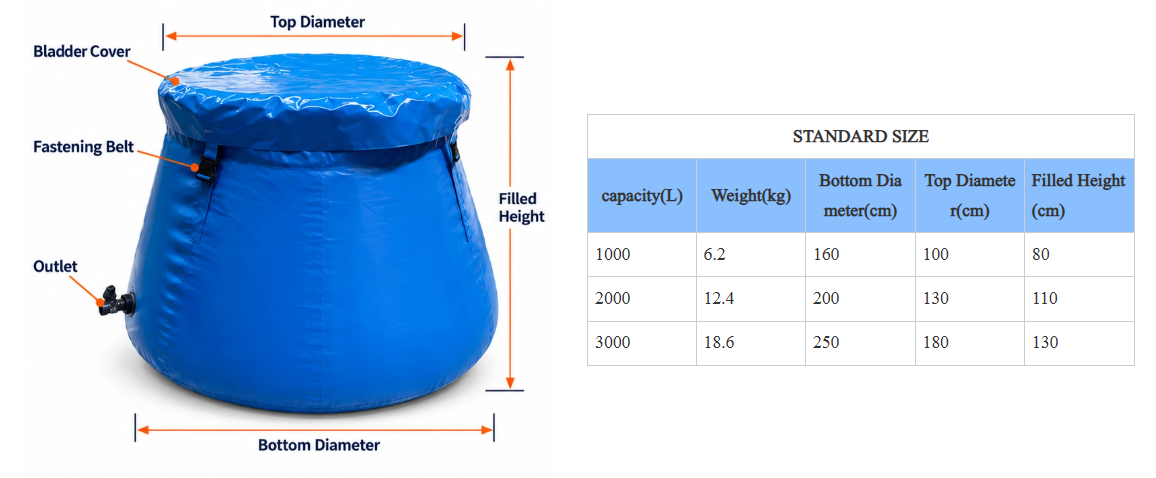
Onion water tanks are available in various capacities and dimensions to suit different project requirements. Common options include 500 L, 1,000 L, 2,000 L,
3,000 L, 5,000 L, 10,000 L and 20,000 L. Custom capacities can also be produced according to the required storage volume, installation area and transportation
conditions. Final dimensions should be confirmed in the approved technical specification.
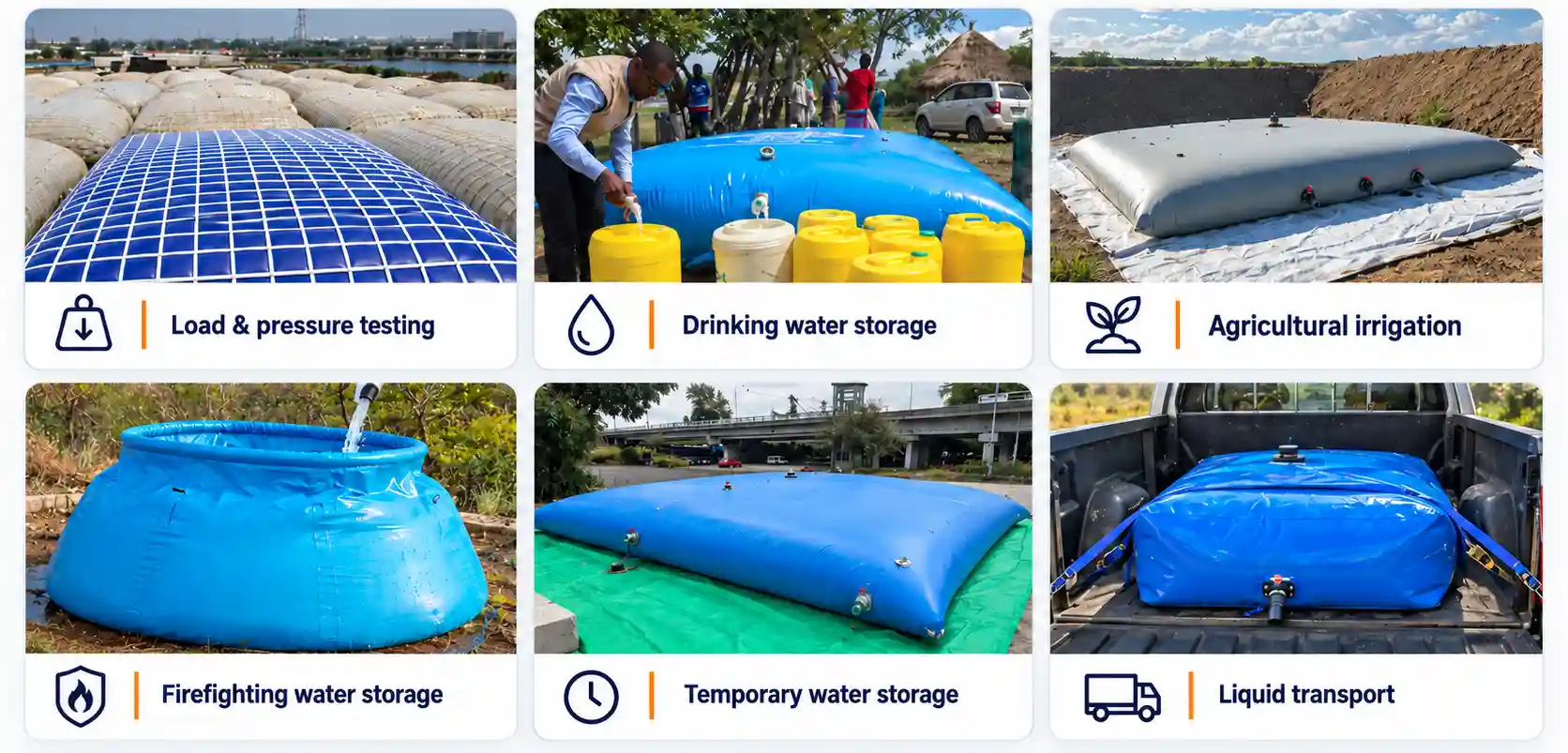
Onion water tanks can be used for emergency water storage, firefighting water supply, agricultural irrigation, construction-site water storage, remote-site water
supply, and military or field operations. Their open-top design enables rapid filling and convenient access to stored water, making them particularly suitable for
temporary and rapid-deployment projects.
Suitability for drinking-water storage depends on whether the fabric and components comply with the applicable potable-water or food-contact standards.
Before ordering, customers should specify the stored liquid, destination market and relevant regulatory requirements so that suitable materials and fittings can be
selected. A standard tank should not be used for drinking water unless its suitability has been confirmed.
Yes. The size, type and position of the drain valve can be configured according to the required discharge rate, connecting pipe diameter and on-site equipment.
Additional fittings may also be incorporated when required. The final configuration should be confirmed based on the tank capacity and intended operating conditions.
A protective groundsheet is strongly recommended. Before installation, remove stones, branches, metal fragments and other sharp objects, and ensure that the
ground is flat and stable. A groundsheet helps reduce the risk of abrasion or puncture to the bottom of the tank. The tank should not be placed directly on rough,
sloping or debris-covered surfaces.
After use, drain the tank completely and clean its internal and external surfaces using a method suitable for the previously stored liquid. Allow the tank and its
fittings to dry thoroughly before folding. Store the folded tank in a cool, dry and well-ventilated location away from sharp objects, direct heat and other potential
sources of damage.
No. A filled tank is extremely heavy, and dragging or lifting it may damage the fabric body, welded seams or drain fittings. If the tank needs to be repositioned,
drain it completely before moving and redeploying it.
Yes. Available customization options may include capacity, dimensions, fabric color, outlet configuration, removable protective cover, groundsheet, storage packaging
and logo printing. To receive a suitable proposal, provide the intended application, required capacity, order quantity, operating environment, fitting requirements and
destination country.